Search This Blog

Saturday, September 17, 2022

9 Principles for Understanding the Old Testament


The Old Testament can often seem a bit confusing and harsh. Even as a Christian, I’ve certainly struggled with some of the passages in the OT and I think many others do as well.  I hope this blog helps us better understand the Old Testament in light of context, culture and the finished work of Christ. 

Much of this has been inspired by Paul Copan’s book on the topic*.


1) We have to remember that the ideal vision of God was always that of the Garden of Eden. The Fall of humanity (after their rebellion against God) shattered everything good. Everything after the Fall was basically a process of God working with sinful humanity to get them back to that ideal. This will eventually happen in the New Heaven and the New Earth (ultimately because of the work of Christ). 


2) One of the most important principles to understand is that of the distinction between the Old Covenant (or Testament) and the New Covenant (or Testament). The Old must be read with the eyes of the New or else we will never really grasp it. 

The Mosaic Covenant (i.e. the Law) is described in the Bible as inferior to the New. Through His work on the cross Jesus Christ fulfilled the Law. Much of the Law (the ceremonies and civic rules) do not apply to us anymore. The Ten Commandments are now written in our hearts and we are aided to keep them by grace, faith and the power of the Holy Spirit


3) Although some of the laws of Moses seem very harsh to us, we have to realize that the Ancient Near East (of which Israel was a part of) was a brutal culture far removed from today’s western society. In contrast to the laws of the surrounding culture, the laws of Moses were less harsh and valued the dignity of human life much more. 


4) The New Testament says that the Law of Moses was a tutor to bring us to Christ. However, even before the Law was given, Abraham was proclaimed righteous by faith and grace (Romans 4:16, Gal 3:18).  OT people were still ultimately saved by faith and grace.


5) In Matthew 19:8 we read Jesus’s words: “Moses permitted you to divorce your wives because your hearts were hard. But it was not this way from the beginning.” Herein is a principle whereby we understand that God sometimes accommodates humanity in their sinful condition but it wasn’t that way in the beginning and God will not leave them there (for Jesus clarifies this in the New Testament). 


6) Just because something is recorded in the OT does not necessarily mean it is endorsed by God.  If we think of some of the atrocities committed in the Book of Judges, we can see that this was a record of history not a prescription on how to live. 


7) The language of the OT and of the Ancient Near East (ANE) must be considered as well. Hyperbole (exaggerated statements or claims not meant to be taken literally) were in common use in the ANE. For example, the OT describes the total annihilation (men, women and children) of the Canaanites and yet it also records that the Canaanites continued to live in the land after this war. It’s a bit like one sports team saying they ‘utterly destroyed’ another team – we understand this to be hyperbole.  

Another note – when God judges in the OT it is not in regard to ethnicity but in regard to sin.  God judges both Israel and the surrounding nations in measure of their sin.


8) It is ironic that we in the modern West look down our noses so much at Judeo (and even Christian) ethics and values when, in fact, our society was really built on them. We certainly do not live under the OT anymore but even in the OT those ethics and values were forming.


9) It often seems like God is very harsh and judgemental in the OT. It helps to remember that God is gracious and merciful and only judges when greatly provoked. “As surely as I live, says the Sovereign LORD, I take no pleasure in the death of wicked people. I only want them to turn from their wicked ways so they can live. Turn! Turn from your wickedness, O people of Israel! Why should you die?” Ezekiel 33:11

We must also realize that in Jesus we also see the true nature of God. He is the perfect image of what God is truly like (“Anyone who has seen me has seen the Father.” John 14:9). So look to Jesus. 


• “Is God a Moral Monster: Making Sense of the Old Testament God” by Paul Copan Copyright 2011 by Baker Books.  Although the title sounds somewhat alarming this is actually a claim made by the New Atheists who mock God. Paul Copan answers this claim well in the book. 


Friday, July 29, 2022

The Logos and the Gospel


In the first verse of his Gospel, John the Apostle uses a striking word, full of meaning and recognizable to any Greek person at that time.   

“In the beginning was the Word, and the Word was with God, and the Word was God.” John 1:1

John’s “Word” is translated from the original Greek “Logos”.

Dane Ortlund explains that the term “Logos”: “…referred in Greek thinking to Reason with a capital ‘R’, the great organizing principle of the universe, the impersonal rationality behind all that happens, that which injects coherence and stability into the universe.”  

John purposely uses this pregnant word to describe Jesus Christ. He was stating that this all-powerful Logos was not just an “organizing principle” but very creator God.  

Furthermore, much of Greek philosophy thought that there was a major distinction between what is material and what is spiritual. The material was evil and the spiritual was good – and never the twain shall meet. 


John shocks them again when he says in verse 14: “And the Word became flesh and dwelt among us…”

Here in a stunning and counterintuitive move, the Logos (that which is spiritual) came to earth and took on flesh and blood (that which is material).  This was no “impersonal rationality” but a very personal God. Such a notion would wreak havoc and wonder on the understanding of the day. 

“The Greeks wished to shed the flesh and fly up to heaven; John says that heaven put on flesh and came down to earth.” (Ortlund). 

Not only is this Logos the creator God but he has also taken on flesh and dwelt with humanity – and would soon suffer, die and rise again to redeem them.  

John takes an enormous Greek thought and uses it to share the Gospel of Jesus in a thrilling manner.  In this gospel, the Logos is far more than a principle, He is a Person; not just a rationality but a Redeemer.


Monday, January 3, 2022

5 Facts about Marc Andre Leclerc and the First Solo Ascent of the Emperor’s Face (Mount Robson)


Heads up - The following contains spoilers for “The Alpinist”.


Mt. Robson's Emperor Face at twilight. Berg Lake, Mt. Robson Provincial Park, B.C. [Photo] Jeffrey Pang/Wiki Commons


The Man

Marc Andre Leclerc was born in Nanaimo, BC on October 10th, 1992 and died in Alaska in 2018. During his brief life he gained a reputation as an unassuming yet fearless mountain climber. He was especially known for his free solo (no ropes) ascents of many peaks around the world.  His life is the subject of the 2020 film, “The Alpinist”.


The Mountain

Mount Robson rises nearly 10,000 feet above the Yellowhead highway for a total of 12, 972 feet (3,954 M) above sea level. It’s Emperor’s Face stands tall at about 8,000 feet of ice, rock and snow. 

The Emperor’s Face was first ascended by climbers in 1978 but had never been free climbed solo by anyone until Leclerc.  In 2002 Barry Blanchard and 2 other climbers ascended the route known as “Infinite Patience”.  Leclerc would eventually follow this same line up the face.


The Reason

“I was being drawn toward the mountain in a search for adventure, by a desire to explore my own limitations and to also be immersed in a world so deeply beautiful that it would forever be etched into my memory.” Marc Andre Leclerc

After getting to know the Canadian Rockies by climbing in Alberta for a time, Leclerc felt he was ready for Mount Robson and it’s Emperor’s Face. In April of 2016, he hopped on a bus out of Jasper back towards his native British Columbia.

He later commented: “When the bus dropped me off on the side of the highway, I saw Mt. Robson for the first time. It towered above the road like no other mountain I'd ever seen. The summit felt incredibly distant, as if it were located on another planet.”


No Limelight

Leclerc had never liked the spotlight. He simply didn’t care if anyone knew what amazing things he was accomplishing.  In fact, he had actually been filming The Alpinist with directors Peter Mortimer and Nick Rosen, when he abruptly “disappeared” from the filmmakers and went off on his own.  

It was during this hiatus that Leclerc climbed the Emperor’s Face.  He later explained to the directors that it just didn’t feel like a solo attempt if other people were there – even if they were just filming. He eventually agreed to do the climb again in order for them to capture it.


The Summit

Leclerc used the Infinite Patience route to summit the mountain. On his first climb of the face he made it to the top and later wrote - “I stumbled onto the top of Mt. Robson at sunset, and was rewarded with a breathtaking view: snow and ice extended as far I could see in all directions. Robson seemed to be so much taller than any of the surrounding peaks— it was like a platform in the sky that looked down on the rest of the world.”

Leclerc had to sleep on top of the summit due to weather conditions where he endured a miserable night of freezing cold winds and little sustenance but eventually made it down safely to ensure the first ever free solo climb of Mount Robson’s Emperor’s Face.

For a description of the ascent in Marc Andre’s own words see this Alpinist article.


“I'm happy to say that my visit with the Emperor was a truly special experience. At first I was intimidated by his strong aura, but in the end we became friends and the King generously shared his wealth, leaving me a much richer person.” Marc Andre Leclerc

Tuesday, December 29, 2020

7 Facts about the Russian Mennonites

 7 Fast Facts about the Russian Mennonites


#1 Anabaptist Origins

The Anabaptist (literally meaning “to baptize again”) movement began in 1525 when people like Conrad Grebel, Felix Manz and others baptized each other a second time as adults in a small meeting in Switzerland.  

The Anabaptist were originally part of the Protestant Reformation but soon came to believe in such further distinctions as believer’s baptism (as opposed to infant baptism), complete separation of church and state and of, course, pacifism (the unwillingness to bear arms).

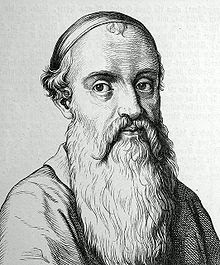
Menno Simons


#2 Menno Simons 

Menno Simons (1496 – 1561) was a Roman Catholic priest in Friesland (now a province of the Netherlands). He began to question some Roman Catholic practices and, when his Anabaptist brother was killed for his beliefs, he became an integral part of the Anabaptist movement.  It is from Menno that Mennonites take their name. 


#3 European Persecution

Russian Mennonites are descended from the Dutch Anabaptists who later moved to Prussia - an old kingdom that now covers large parts of Germany and Poland. During the 16th century Mennonites suffered severe persecution for their beliefs from the hands of both the Roman Catholic Church, the Protestant Church and various European heads of state.  This persecution affected their sense of identity and brought them closer together. 

The Mennonites would often be invited by a king or prince to live in their territory because they were known as honest, hard workers who could farm almost any type of land. However, whenever there was a change of influence on the leadership of that territory, the Mennonites would be forced to move again to maintain their way of life and avoid persecution. 

Catherine the Great of Russia


#4 Catherine the Great of Russia

In 1786, Catherine the Great, Empress of Russia sent an envoy to the Mennonites in the Prussia area to invite them to come and live in her newly acquired south western lands now known as Ukraine. In exchange they would receive religious freedom and military exemption. 

According to a Mennonite education website: “The first four hundred families to arrive in Russia, settled on the banks of the Chortitza River, a tributary of the Dnieper River. This village became known as the Chortitza Colony… the Chortitza Colony quickly grew into 15 separate villages with 89,100 acres of land by 1800. A second Colony, Molotschna, was established one hundred miles southeast of Chortitz a few years later.”


#5 The First Exodus from Russia

Eventually the Russian government threatened to take such rights as military exemption and the Russian Mennonites feared they would soon lose their autonomy and identity. As a result, between 1873 and 1884, approximately 18,000 Mennonites left Russia. About 7000 of those arrived in Canada, settling in Manitoba. 


#6 The Russian Revolution and World Wars

The Russian Revolution of 1917 created great turmoil for the remaining Mennonites as they were often harassed and killed by Russian peasants. Some young men rethought their stance on pacifism in these dark times in order to protect their families. They were called “die Selbstschutz” meaning self-protectors. 

The Mennonite education site says:  “During World War I, many of the Mennonites who had remained in Russia lost their lives as a result of various illnesses, such as epidemic typhus. Many also had their homes plundered and some families were massacred by bandits. After this time of war, revolution, anarchy and famine, approximately 25, 000 more Mennonites immigrated to North America in the 1920’s. After World War II another 12, 000 Mennonite refugees were accepted in Canada and the United States.”


#7 My Family

My great great great grandparents were Johann and Anna Harder. According to various genealogical records, Johann and Anna were born in the same area now known as Ukraine in the early 1800’s. They and their children were among the first wave of Russian Mennonites to immigrate to North America. In 1876 they landed at Quebec City and made their way to Manitoba. 

Among their children was my great great grandfather, Isaak Harder. He was born in Russia but immigrated about the age of 9.  He would go on to marry Helena Penner and they would go on to have my great grandfather Cornelius P. Harder after having moved to Saskatchewan. 

Cornelius P. Harder would father my grandfather (among many other children) with Agatha Derksen. They named him Cornelius D. Harder. My grandfather would later use his middle initial to call himself “Del”. He married my grandmother, Hilda Sanders and the rest is history. 


P.S. My wife and I would end up adopting a son from Vietnam. We joined another family as they were also adopting a Vietnamese boy from the same orphanage. In an amazing turn of events, we eventually found out that the husband and I were actually distant cousins – we both descended from Johann and Anna Harder of the Russian Mennonites. 


Friday, July 24, 2020

The Hypostatic Union 101: 5 Thoughts on the Deity and Humanity of Jesus Christ


Definition

The Hypostatic Union is a theological term for the critical teaching that Jesus Christ had both a fully divine nature and a fully human nature in one Person. Hypostasis in Greek means “essence or substance.”

 In his Systematic Theology, Wayne Grudem defines the Hypostatic Union simply as:


“Jesus Christ was fully God and fully man in one person, and will be so forever.”

This teaching is made clear throughout the Bible. John’s Gospel is a wonderful example:


“In the beginning was the Word, and the Word was with God, and the Word was God. He was in the beginning with God. All things were made through him, and without him was not any thing made that was made… And the Word became flesh and dwelt among us, and we have seen his glory, glory as of the only Son from the Father, full of grace and truth.” John 1:1-3, 14 

Early Christian art depicting both the human and divine sides of Jesus Christ


Fully God

According to Scripture and 2000 years of orthodox teaching, Jesus Christ is the Second Person of the Trinity (God the Son). For more information on the mystery of the Trinity please see The Trinity 101.

For those who don’t believe Scripture to be the inspired Word of God (or even for those of us who do) the following short video by Dr. William Lane Craig looks at how the historical Jesus thought of Himself. I highly recommend a quick watch! 


There are some (such as the Jehovah’s Witnesses) who teach that Jesus Christ was simply a creation of God rather than God Himself. They even do some underhanded translating of the Greek New Testament to try and teach this (John 1:1 is translated “The Word was a god” instead of “The Word was God” – there is no Greek basis for this whatsoever). 

John 1:3 says that “All things were made through him, and without him was not any thing made that was made…”. Clearly if everything that was ever made was made by Jesus Christ then Jesus Himself could not have been made.  


Fully Human

Just as important as the teaching that Jesus is fully God is the teaching that Jesus is fully human but without sin. As the write of Hebrews so beautifully puts it:

“For we do not have a high priest who is unable to sympathize with our weaknesses, but one who in every respect has been tempted as we are, yet without sin. Let us then with confidence draw near to the throne of grace, that we may receive mercy and find grace to help in time of need.” Hebrews 4:15-16

As the old theologians used to say: “Remaining what He was, He became what He was not.” There was no subtraction in Jesus becoming human - only addition. 

John Piper has aptly said: “There are doctrines in the Bible that are worth dying for and living for. They are the ground of our life. They are the heart of our worship. The divine and human nature of Christ in one person is one of those doctrines.”  


“The Emptying” 

Philippians 2:7 reads: 

“You must have the same attitude that Christ Jesus had. Though he was God, he did not think of equality with God as something to cling to. Instead, he gave up his divine privileges; he took the humble position of a slave and was born as a human being.” 

Other translations say: “but emptied himself, by taking the form of a servant”.  There are some today who say that Jesus Christ emptied Himself of His divine nature so that He was nothing more than a man filled with the Holy Spirit (and thus we should also be able to do all the things Jesus did on earth). This is a blatant false teaching and leads to twisted preaching with painful results. 

So what exactly did Jesus “empty” Himself of in this great passage? There is admittedly some mystery to this question. However, we know from the context of the New Testament that it was not His Divine nature He emptied Himself of but rather His Divine rights; not His Divine attributes but rather His Divine privileges. 

In times of war, a king may have a royal right to stay in the safety of his palace. However, should he choose to relinquish that right and become a soldier on the field that does not mean that he is no longer king. It means that he is now both king and soldier.  For a more in depth look at this passage of Scripture please see: The Kenosis Hymn: 5 Fascinating Facts about Philippians 2:5-11


The Hypostatic Union and the Gospel

Athanasius was a 4th century Christian bishop who battled nearly his entire life for the teaching of the Hypostatic Union. An excerpt from an issue of Christianity Today tells us why: 

“To Athanasius this was no splitting of theological hairs. Salvation was at issue: only one who was fully human could atone for human sin; only one who was fully divine could have the power to save us.” 

And this is why the Hypostatic Union is an absolute key teaching of Christianity – it is at the very heart of the Gospel. 


“For in him (Jesus Christ) the whole fullness of deity dwells bodily…” Colossians 2:9

Saturday, July 11, 2020

10 Fast Facts about Bernie “Boom Boom” Geoffrion: Hockey Legend and Pioneer of the Slap Shot


1) Early Life

Joseph Andre Bernard Geoffrion was born February 16th, 1931, in a suburb of Montreal. He was a direct descendant of early French settlers to the colony of Montreal (one of whom was a “King’s Daughter” – a collective of young French woman sent over to New France by King Louis XIV). 


2) The Slap Shot

Bernie Geoffrion is considered a pioneer of the now famous “slap shot” in the National Hockey League. His shot was so hard and heavy that a writer for the Montreal Star gave him the name “Boom Boom” while he was still playing in Junior League. 


3) Marriage to Marlene

Marlene Morenz was the daughter of Hockey Hall of Famer Howie Morenz and was introduced to Bernie by her brother at a figure skating event at the Montreal Forum. By the age of 8 Marlene had lost her father, one of her brothers and her mother and had lived in an orphanage and a convent. 

She survived it all to become a figure skater but gave that up for Bernie, marriage and a family of her own. They married on May 3rd, 1952 and had three children – Linda, Bob and Danny. Marlene had a profound influence on “Boom”. 


4) NHL Career

Geoffrion played his first NHL game when he was called up (along with Jean Beliveau) by Montreal Canadien’s Manager Frank Selke on December 16th, 1950. He wore number 5 and would go on to play 14 seasons for his beloved Canadiens and then 2 seasons for the New York Rangers. 


5) Hockey Achievements

Just some of Boom Boom Geoffrion’s achievements included:

>Winning the Calder Trophy as Rookie of the Year
>Winning two Art Ross Trophies as well as the Hart Trophy (MVP) in 1961
>Becoming the only the second player to score 50 goals in one season (after Maurice       “Rocket” Richard)
>Winning 6 Stanley Cups (Including 5 in a row)
>Being inducted into the Hockey Hall of Fame


6) Teammates 

Geoffrion played junior hockey against future teammates including: Jean Beliveau, Dickie Moore and Jaques Plante among others. On the Montreal Canadiens he played on a stupendous line with Beliveau and Bert Olmstead and later with Henri Richard and Dickie Moore. He also had Hall of Fame defenseman Doug Harvey on the blue line. 


7) Rocket Richard’s Shadow

Despite his amazing talent and scoring, Geffrion was on a team of future legends and perhaps no one more so than Maurice “The Rocket” Richard. Despite leading the league in points one year Geoffrion had to settle for 2nd Team All-Star behind Richard. 

However, it was when Richard had been suspended by Commissioner Clarence Campbell and Bernie scored a goal to pass Richard that the Montreal fans turned on Boom. He was sensitive to criticism and pleaded with the fans that he “couldn’t not score”.  He actually considered leaving the game but Richard and Beliveau talked him out of it. 


8) Coaching Career

Geoffrion had high hopes of coaching his beloved Canadiens and so he retired and took his first job as a coach with the minor league Quebec Aces in 1964. He went on to coach the New York Rangers and the Atlanta Flames and finally fulfilled his dream of coaching the Habs in 1979. Unfortunately coaching caused him a lot of stress and his stomach ulcers often sidelined him and ended up cutting short his coaching career. 


9) His Faith

In 1979, Marlene Geoffrion was invited to attend a Bible study in Atlanta. She hadn’t wanted to go but relented out of sheer boredom. She was profoundly affected by that Bible study and soon became a Christian. She began to pray for Boom. Ed Kea, a player for the Atlanta Flames, invited them to a Christian conference for athletes and it was there that Marlene recalls, 

“One of the speakers asked a question that caught our attention:  “If you were to die today, where would you go?” Boom couldn’t answer that question, and it bothered him.  He spoke to Ron Pritchard a former NFL player and Ron shared with him.  He prayed with Boom and told him not to put off his desire to become a Christian, as tomorrow may never come.  Let me remind you. We were religious, but we didn’t have a relationship with the Lord.  Boom accepted Jesus into his heart in June, 1979.  We began to attend a weekly Bible Study.”


10) Death & Legacy

Bernie “Boom Boom” Geoffrion was finally due to have his number retired at the Montreal Forum on March 11th, 2006. Unfortunately, Bernie passed away due to stomach cancer just hours before the ceremony was to take place. He had made Marlene promise to go no matter what though – and she did. 

Before 21,000 adoring fans, her father, Howie Morenz’s number was lowered to half-mast and her husband, Bernie’s, was elevated to meet it there. Then together both numbers were raised to the rafters in an emotional and fitting tribute to one of the greatest hockey players of all time. 


One of Bernie's favourite Bible verses:

"For what does it profit a man to gain the whole world and forfeit his soul?" Mark 8:36

Note: Bernie and Marlene’s son Dan played 111 games in the NHL for the Canadiens and the Winnipeg Jets. Dan’s son, Blake Geoffrion was a second round pick of the Nashville predators and proudly wore number 5 in honour of his grandfather. 

Sources and Further Reading:

“Boom Boom: The Life and Times of Bernard Geoffrion”  -  Geoffrion and Fischler

https://thehockeywriters.com/hockey-royalty-part-two-bernard-boom-boom-geoffrion/

https://www.hockeyministries.org/home-ice/blog/tmarlene-geoffrion/

Saturday, May 16, 2020

Modalism vs The Trinity: 5 Thoughts On an Ancient Error


In my study of the Trinity over the past few years there seems to be an ancient error (or heresy) that is becoming more and more accepted in today’s Christianity – the error of Modalism. Modalism claims that there are not three distinct Persons of the Holy Trinity but rather only one who instead manifests Himself in three different forms or “modes”. This teaching seems to be especially prevalent in certain charismatic wings of the Church. 

A classic example of Modalism is that of Sabellius (c. A.D. 215), a priest who taught that God is not three Persons but manifested Himself as the Father in the Old Testament, the Son in the Gospels and the Holy Spirit from Pentecost until present day. This is clearly not in line with Scripture and the orthodox teaching of the Church throughout the centuries.


It is not my intent to judge a Modalist’s salvation or intentions but rather point the Church to Scripture. Here are 5 thoughts on this ancient error.


#1 It Is Unbiblical ( A. Jesus’ Baptism)

The Bible, of course, is where we must start. It is the source and final authority on all of our knowledge of Christian truth. A clear example is the baptism of Jesus as described in Matthew 3:16-17:

“And when Jesus was baptized, immediately he went up from the water, and behold, the heavens were opened to him, and he saw the Spirit of God descending like a dove and coming to rest on him; and behold, a voice from heaven said, “This is my beloved Son, with whom I am well pleased.”

Unfortunately, Modalists try to say that this is an occasion where God suddenly decided to appear in all three forms at once. This goes against the clear context and logical interpretation of the text. There are many verses like this one See the Transfiguration in Matthew 17). 


#2 It Is Unbiblical (B. The Father Speaks to the Son and Vice Versa)

However, if we need more evidence then it is crystal clear that the Father speaks directly to the Son, using the pronoun “You” (as in a separate person), and vice versa on several occasions. Consider just one in Luke 22:41-42

“And he (Jesus) withdrew from them about a stone’s throw, and knelt down and prayed, saying, “Father, if you are willing, remove this cup from me. Nevertheless, not my will, but yours, be done.”

As D.A. Carson reminds us, “It was not long before the church roundly condemned modalism, not least because Scripture is replete with passages in which, for instance, the Father addresses the Son, and the Son the Father.”

In addition, we read with assurance that, “He (Jesus) is the radiance of the glory of God and the exact imprint of his nature, and he upholds the universe by the word of his power. After making purification for sins, he sat down at the right hand of the Majesty on high…” Hebrews 1:3.  How can Jesus sit at the right hand of the Father if they are not distinct Persons?

We also note that the Father and the Son “send” the Holy Spirit:

“But when the Helper comes, whom I will send to you from the Father, the Spirit of truth, who proceeds from the Father, he will bear witness about me.” John 15:26

The Shield of the Trinity 


#3 The Early Church Fathers Attested to the Trinity

The doctrine of the Trinity was not “invented” at the Council of Nicaea as some claim. As New Testament Scholar, Michael F. Bird, explains: 

“In other words, (*the creeds of Nicaea and Constantinople) of the fourth century are not purely politically driven and radically innovative statements of faith. They are, instead, contextualized clarification of New Testament teaching.”

Justin Martyr and Hippolytus (of the 2nd century) both wrote against the early teachings of Modalism, defending the orthodox Trinity. Polycarp, the disciple of John the Apostle cried these Trinitarian words as he was burned at the stake for his faith:

“I glorify you, through the eternal and heavenly High Priest, Jesus Christ, your beloved Son, through whom to you, with him and the Holy Spirit, be glory both now and for the ages to come.”

#4 Accepting Mysteries in Scripture

There is a tendency of our human nature to want to explain everything to the last minute detail. When we run into mysteries or paradoxes in the Christian faith (such as the Trinity) we recoil and try to change the clear teaching of Scripture into something our finite minds can comprehend. This almost always leads to heresy. Theologian Louis Berkhof reminds us that: 

“(The Church) has never tried to explain the mystery of the Trinity but only sought to formulate the doctrine of the Trinity in such a manner that the errors which endangered it were warded off.”


#5 An Over-emphasis on the Holy Spirit and His Gifts

While we heartily confess that the Holy Spirit is fully God, we also confess He is a distinct Person of a triune Godhead. If, as the Modalists claim, the Holy Spirit is the one and only manifestation of God in the present day it is not surprising that error can develop in that thinking. An Over-emphasis on the Holy Spirit and His Gifts not only causes errors about the Holy Spirit and His gifts but also takes us away from the Father and the Son. We must remember that the main mission of the Spirit is to glorify Christ (John 16:13-14). Charles Spurgeon has put it well:

“…the Holy Spirit is our Lord’s glorifier. I want you to keep this truth in your mind, and never forget it; that which does not glorify Christ is not of the Holy Spirit, and that which is of the Holy Spirit invariably glorifies our Lord Jesus Christ.” 


In conclusion, D.A. Carson reminds us that the doctrine of the Trinity (and thus the refutation of Modalism) is so important because it deals with both the very nature of God and the very nature of the Gospel. 

“If we are to worship God aright, we must worship him as he is, as he has disclosed himself to us. The only alternative is to worship a god who is progressively false as our understanding skews away from the truth… Various truths connected with the gospel itself become incoherent if one abandons robust Trinitarianism.”

It is clear from Scripture that God’s nature is of a Trinity. It is also clear that the Father purposed the work of redemption, the Son competed it and the Holy Spirit applies it to us personally. All had and continue to have a hand in the Gospel.